
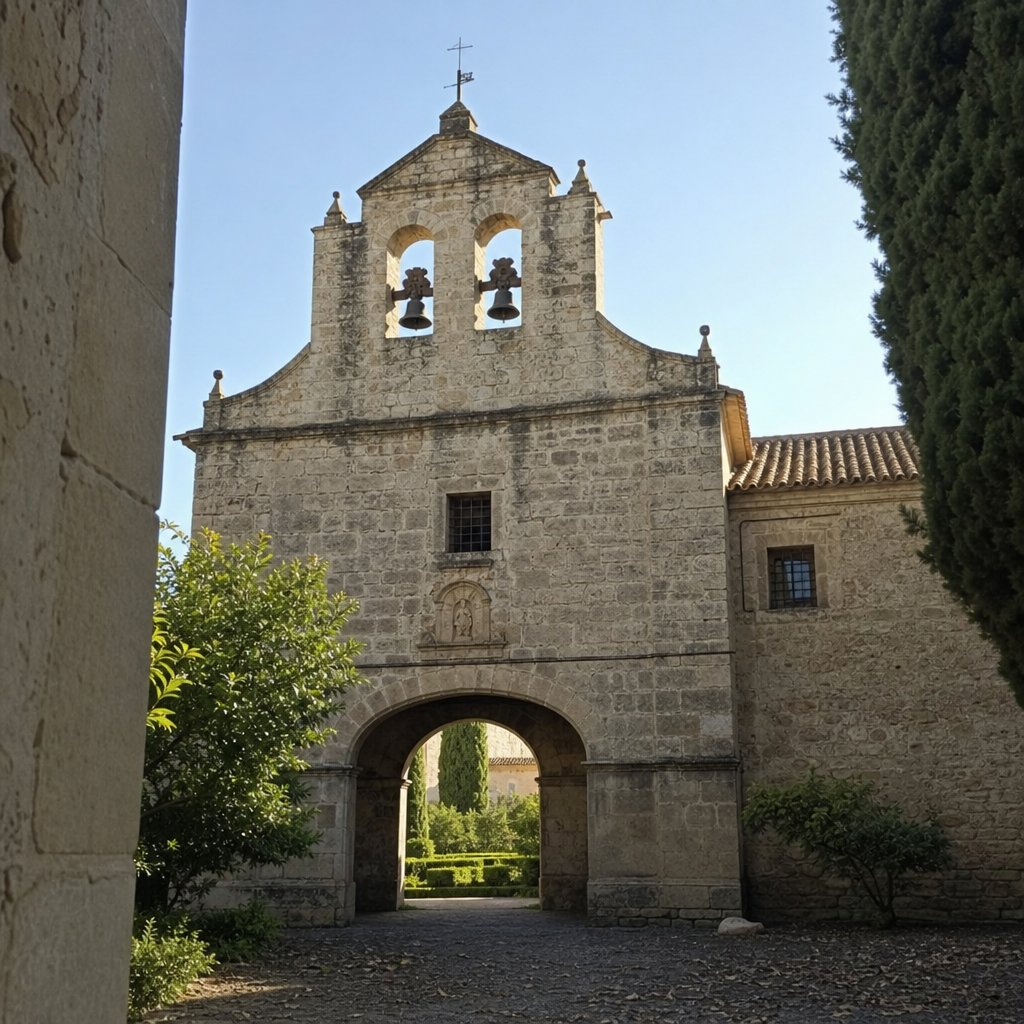
A working convent since 1616
Convento de la Encarnación
Commissioned by a duke, opened with a king in attendance, and still home to a real community of Poor Clare nuns four centuries later, not a museum piece, a living building.
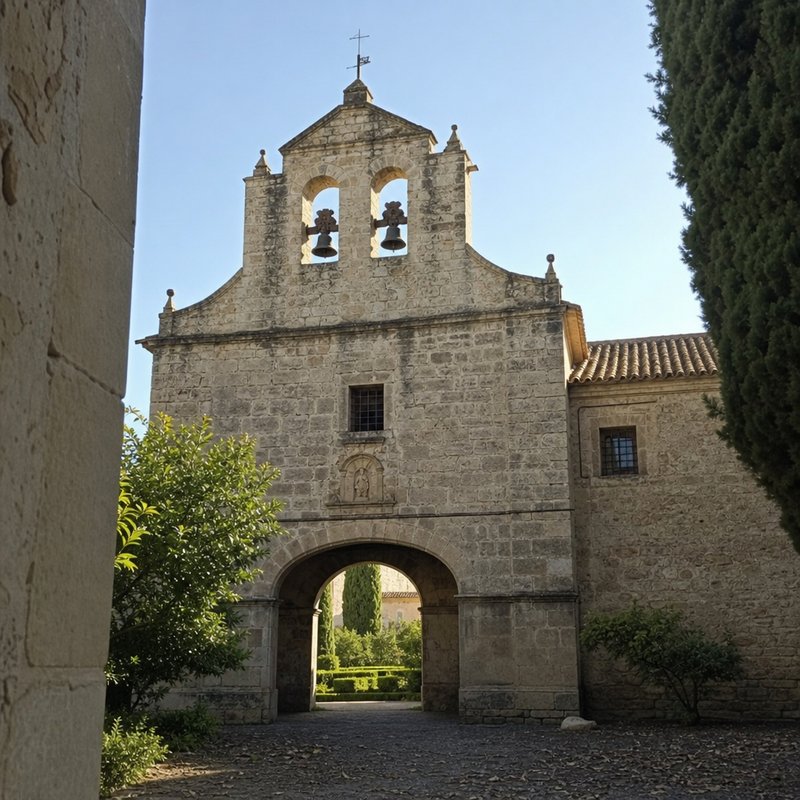
Commissioned by the Duke of Lerma
The convent was commissioned by the Duke of Lerma, lord of Valdemoro from 1602 to 1625, to house Poor Clare nuns (Clarisas) of his own lineage. It was designed by Fray Alberto de la Madre de Dios, and inaugurated on 19 May 1616 with King Philip III and the Archbishop of Toledo both in attendance, a genuinely royal send-off for a small-town convent. The founding community was four nuns transferred from Madrid's own Descalzas Reales monastery, led by the convent's first abbess, Sor Ana de Víctor, the Duke's own niece.
The Duke's imprint on the building goes beyond the founding story: the main entrance carries a sculpture of Santa Clara flanked by the heraldic shields of the Houses of Lerma and Medinaceli (his wife Catalina de la Cerda's family), and the street the convent sits on today is literally named Calle Duque de Lerma.
Still a working monastery, not a museum
Four centuries on, the convent remains an active community of Franciscan Poor Clares: this isn't a preserved historical shell, it's a religious house people still live in today. As an enclosed order, cloister and interior access are limited even though the church itself functions as a place of worship. The community also runs a small convent shop selling traditional sweets (truffles and almond pastries among them), a real, current detail rather than a piece of history.
We couldn't independently confirm a published visiting schedule for the church, so if seeing the interior matters to your trip, call the convent directly (+34 918 950 752) rather than relying on a secondhand listing, including this one.
Architecture and the 2016 heritage designation
The convent complex covers roughly 4 hectares, built in a Toledo-style masonry of ashlar stone bands with brick, with a central square cloister and an orchard of more than 200 trees. Its facade design echoes Juan Gómez de Mora's Convento de la Encarnación in Madrid, a deliberate architectural reference, not a coincidence of naming. The Latin-cross church itself has a barrel-vaulted nave divided into three sections and holds a 17th-century altarpiece, including works known as "The Incarnation" and "The Calvary."
The Comunidad de Madrid's government council formally declared the convent a Bien de Interés Cultural (Cultural Heritage Asset) on 8 November 2016, timed to mark the building's 400th anniversary, citing its early Baroque/Mannerist architecture, its largely intact original structure, and its historical weight as one of Valdemoro's own landmarks. That designation grants the building integral protection under the town's municipal catalog of protected assets.
A history that includes two wars
The convent's four centuries haven't been uneventful. During the Peninsular War, it was plundered in 1808, and a suppression order followed in 1809. More recently, during the Spanish Civil War (1936–39), the nuns were evacuated and the church roof was struck by a shell, real wartime damage, later restored in 1941. It's a detail worth knowing precisely because it complicates the postcard version of a "quiet historic convent": this building has survived real disruption, twice, and is still standing and still in use.
Find it on the map
Official page (Valdemoro Turismo)Common questions
Can you visit the Convento de la Encarnación in Valdemoro?
The church functions as a place of worship and is described as accessible to the public, but this is an active, enclosed Poor Clare community, not a sightseeing attraction: interior/cloister access is limited. We couldn't independently confirm a published visiting schedule, so call the convent directly (+34 918 950 752) before planning a visit.
Is it called "Convento de la Encarnación" or "Convento de Santa Clara"?
Both names refer to the same building. "Convento de la Encarnación" is the more commonly used current name; "Santa Clara" (or "de las Clarisas") refers to the Poor Clare order that has lived there since 1616 and still does today.
Can you buy anything from the nuns at the convent?
Yes, the community runs a small convent shop selling traditional sweets (truffles, almond pastries), a real and current detail, not a historical footnote.