
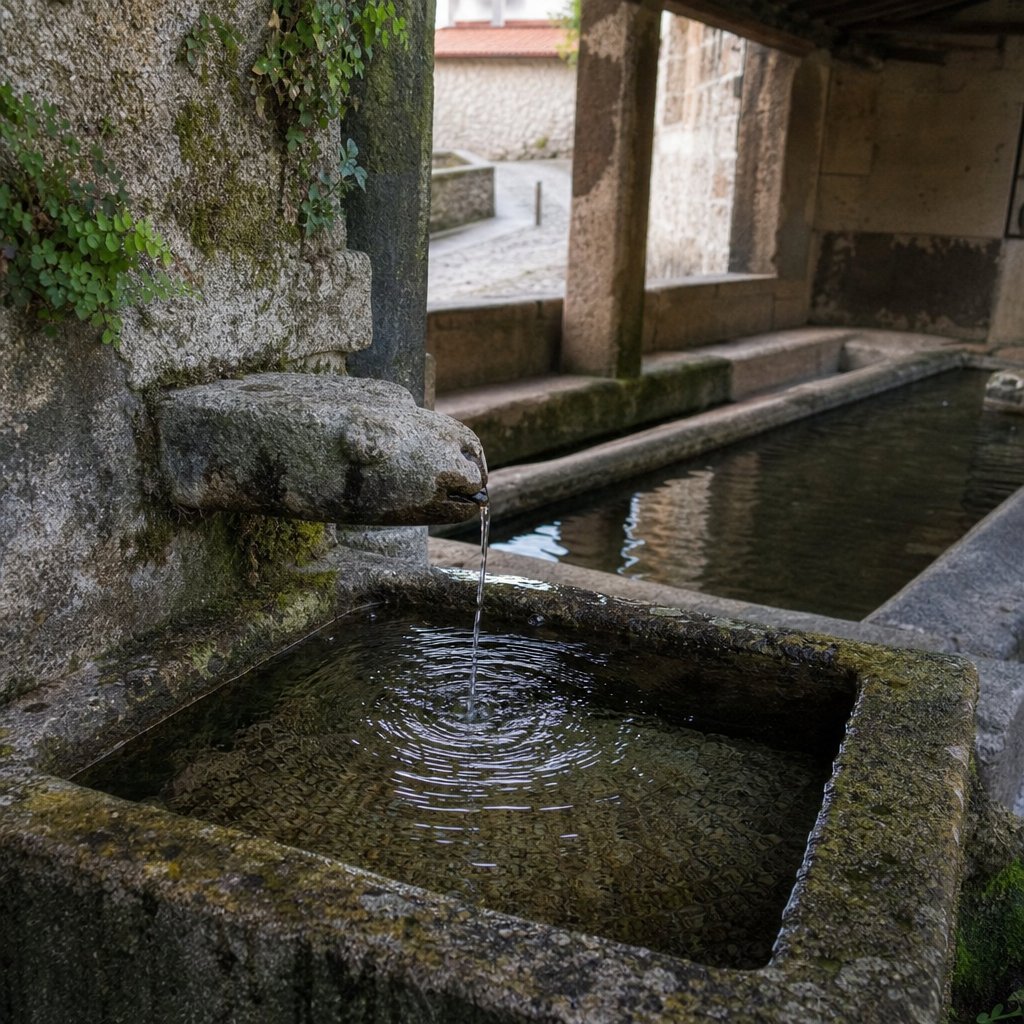
Four centuries of civic water
Fuente de la Villa y Lavadero
A working 1605 fountain that's outlived its own spring, a washhouse that's been a gym since 1989, and the oldest known carving of Valdemoro's coat of arms: three real stories in one small site.
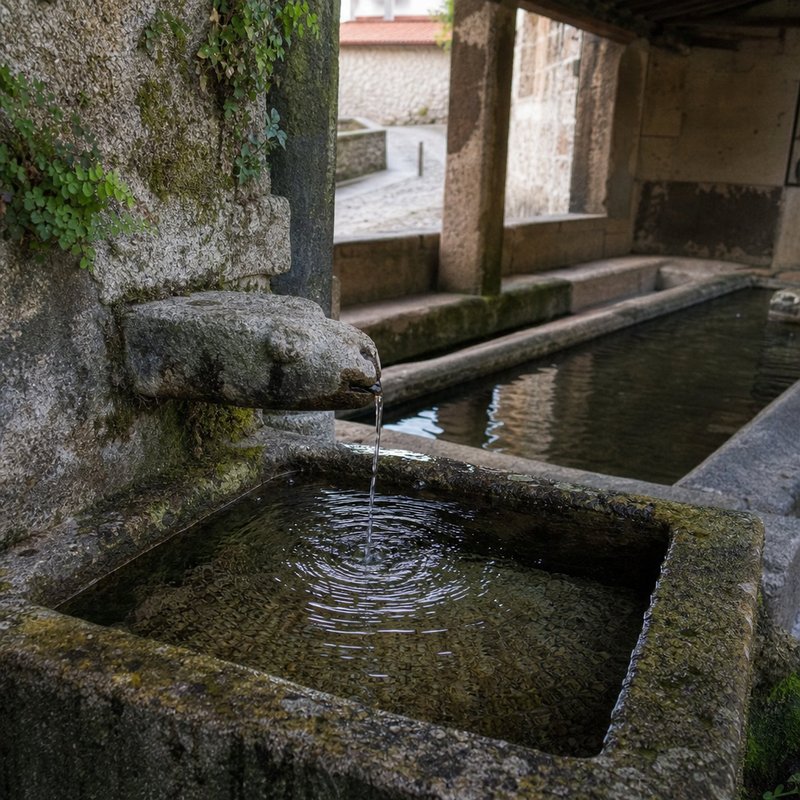
Built in 1605, for the town's livestock market
The fountain was built from Colmenar stone in 1605, funded with municipal assets, and originally served a practical civic purpose: watering the livestock brought to the town's market. It has three spouts and, at its top, the oldest known carved representation of Valdemoro's own coat of arms, a genuine four-century link between an everyday piece of civic infrastructure and the town's identity, not a later decorative addition.
It stands on Calle Illescas, at the corner with Paseo del Párroco Don Lorenzo, central and easy to reach on foot from the rest of the historic centre.
A fountain that's outlived its own spring
The fountain has been restored repeatedly across its history: in 1778 during an Enlightenment-era rebuild, again in 1940, and once more in the late 1990s, when the stone and water channels were renewed. Its original spring dried up in 2006; since 2016, the water visitors see flowing has been kept going by a recirculation pump drawing from an underground cistern, not the fountain's original source. Most recently, a €45,967.90 restoration ran from May to July 2024, funded by the Comunidad de Madrid and carried out by contractor Titanio Estudio SL, a real, recent, documented investment rather than a monument left to weather.
The lavadero: a separate, later building with its own second life
The washhouse (lavadero) next to the fountain is a distinct structure, built later (between 1896 and 1898, completed in 1906) of brick reinforced with stone, with two basins for washing and rinsing. Local women used it for laundry until running water reached homes in the 1970s, after which it passed through several other uses: a fire station, a warehouse, and eventually, since a 1989 rehabilitation, a dance studio for the Universidad Popular de Valdemoro. It's still standing and still in active civic use, just not for its original purpose.
Protected, but not yet a full national landmark
The fountain currently holds "integral protection" under Valdemoro's own municipal urban-planning catalog, real local protection, but a step below the highest national tier. An application to have it formally declared a Bien de Interés Cultural (Cultural Heritage Asset) with the Comunidad de Madrid's own heritage registry has been on file since 2002, and was reiterated in both 2007 and 2016. As of the most recent sources we could check, that upgrade is still pending rather than granted, a slower bureaucratic story than the fountain's own four centuries of continuous use.
Find it on the map
Official page (Valdemoro Turismo)Common questions
Does the Fuente de la Villa still have running water?
Yes, though not from its original spring: that dried up in 2006. Since 2016, a recirculation pump drawing from an underground cistern keeps water flowing, and a full restoration in 2024 renewed the stone and water channels.
What happened to the lavadero (washhouse)?
It's still standing, on Calle Illescas, built later than the fountain (1896–98), used by local women for washing until household plumbing arrived in the 1970s, and converted since 1989 into a dance studio for the Universidad Popular de Valdemoro.
Is the Fuente de la Villa an official protected heritage site?
It has local 'integral protection' in Valdemoro's municipal urban plan catalog. A full Bien de Interés Cultural (BIC) application has been on file with the Comunidad de Madrid since 2002, reiterated in 2007 and 2016, but as of the latest available sources it remains pending rather than formally granted.